Businesses are expanding beyond a single office faster than ever before. Whether opening new branch locations, supporting remote employees, or operating across multiple cities and countries, organizations require a reliable network that keeps every location connected. As digital transformation accelerates, maintaining consistent connectivity across distributed offices has become essential for productivity, collaboration, and customer service.
Traditional networking methods often struggle to keep pace with modern business demands. Slow connections, inconsistent performance, complex management, and increasing security risks can create operational challenges. Modern enterprise connectivity solutions help organizations simplify branch networking while improving performance, security, and scalability.
This guide explores the challenges of managing multiple locations and explains how businesses can build a secure, centralized, and future ready network.
Understanding Multi Location Enterprise Connectivity
A multi location enterprise operates from two or more offices that need secure and reliable communication. These locations may include headquarters, branch offices, warehouses, manufacturing facilities, retail stores, or remote work environments.
Every location depends on access to business applications, cloud platforms, communication systems, and shared data. Without a centralized networking strategy, each office may operate independently, making management more difficult and increasing operational costs.
Modern enterprise connectivity brings every location together through a unified network that provides secure access, centralized monitoring, and consistent performance regardless of where employees are working.
Challenges of Managing Multiple Branch Offices
As businesses expand, managing network infrastructure becomes increasingly complex. Different internet providers, varying bandwidth requirements, and separate security policies often create inconsistent user experiences.
Some of the most common challenges include:
Inconsistent application performance across branch offices.
Limited visibility into network health and performance.
Higher operational costs caused by managing multiple network providers.
Security risks created by disconnected network policies.
Difficulty supporting cloud applications and remote employees.
Increased downtime when a single location experiences connectivity issues.
Without a modern networking strategy, these challenges can slow business growth and reduce employee productivity.
Building a Centralized and Scalable Network
A centralized networking approach simplifies management while improving reliability across every business location.
Technologies such as SD WAN allow organizations to intelligently route traffic, prioritize business applications, and monitor network performance from a single management platform.
Dedicated Internet Access provides reliable bandwidth for business critical applications, while cloud connectivity ensures employees can securely access platforms such as Microsoft 365, Microsoft Azure, AWS, and Google Workspace.
Centralized security policies help protect every branch using consistent firewall rules, encrypted connections, multi factor authentication, and Zero Trust security principles.
Continuous monitoring enables IT teams to identify potential issues before they affect users, reducing downtime and improving overall network performance.
Business Benefits of Simplified Branch Connectivity
Organizations that modernize their branch connectivity gain significant operational and financial advantages.
Employees experience faster access to business applications, improving productivity and collaboration across departments.
IT teams spend less time troubleshooting network issues because centralized management provides complete visibility into every connected location.
Customers benefit from reliable services, faster response times, and consistent experiences regardless of which office they interact with.
Businesses can also open new branch offices more quickly because modern networking solutions simplify deployment and reduce infrastructure complexity.
Improved scalability allows organizations to support future growth without redesigning their entire network architecture.
Why Choose Qsera for Enterprise Branch Connectivity
Connecting multiple offices requires careful planning, reliable infrastructure, and ongoing management. Qsera helps businesses design enterprise networking solutions that simplify connectivity across every location while maintaining security, performance, and scalability.
Our services include Dedicated Internet Access, SD WAN deployment, MPLS connectivity, Ethernet services, cloud networking, managed network services, business continuity planning, and proactive network monitoring.
We work closely with organizations to understand their operational requirements and build customized networking solutions that support long term business growth.
Conclusion
Managing multiple branch offices should not create unnecessary complexity. By implementing centralized enterprise connectivity solutions, businesses can improve collaboration, strengthen security, reduce operational costs, and deliver a consistent user experience across every location. With Qsera as your networking partner, your organization can confidently expand while maintaining reliable and secure connectivity for employees and customers alike.
Frequently Asked Questions
Common questions about this topic.
Multi location enterprise connectivity is a networking approach that securely connects multiple business offices, branches, warehouses, and remote employees through a centralized infrastructure.
Centralized management improves visibility, simplifies administration, strengthens security, and allows IT teams to monitor every branch from a single platform.
SD WAN intelligently routes network traffic, prioritizes important applications, improves cloud performance, and provides centralized management across multiple locations.
Businesses gain improved productivity, better application performance, stronger security, simplified management, lower operational costs, and easier scalability.
Qsera delivers customized enterprise networking solutions including SD WAN, Dedicated Internet Access, MPLS, cloud connectivity, managed services, and proactive monitoring to help organizations build reliable and scalable networks.
Ready to Build a Better Network?
Talk to Qsera's enterprise networking experts about the right connectivity solution for your business.
More insights on enterprise networking and connectivity.
UncategorizedAugust 25, 2026 5 min read
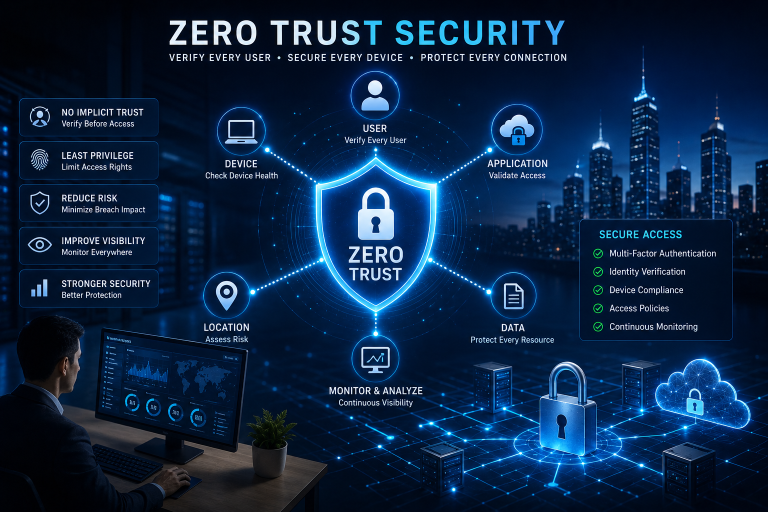
Zero Trust Network Security: How Modern Enterprises Can Secure Every User, Device, and Connection
Introduction Enterprise networks are no longer limited to employees working from a corporate office. Employees connect from branch offices, homes, public networks, mobile devices, and cloud environments every day. At the same time, businesses depend on SaaS applications, cloud platforms, connected devices, and third-party services. This expanded digital environment has made traditional perimeter-based security increasingly […]
UncategorizedAugust 20, 2026 6 min read
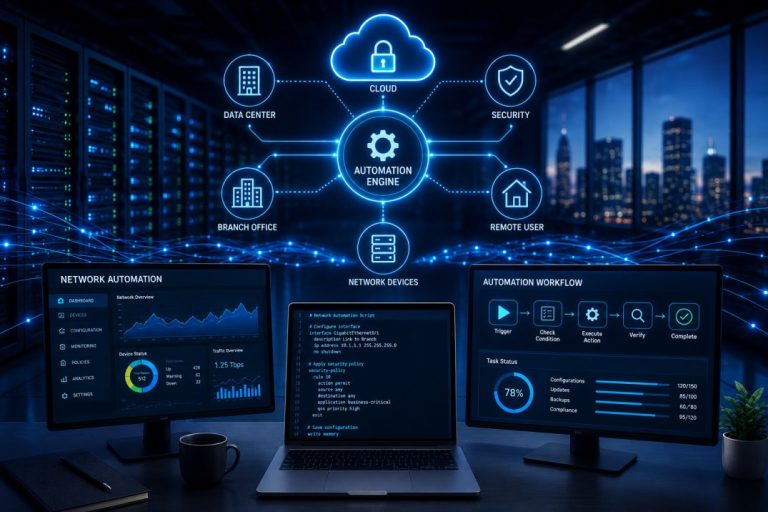
Network Automation in 2026: How Enterprises Can Build Smarter, Faster, and More Reliable Networks
Introduction Enterprise networks are becoming increasingly complex. Businesses now operate across multiple offices, cloud platforms, data centers, remote locations, applications, and connected devices. Managing this infrastructure manually can become time-consuming and difficult to scale. IT teams may spend significant time configuring devices, troubleshooting connectivity problems, monitoring traffic, and responding to repetitive network issues. Network automation […]
UncategorizedAugust 18, 2026 8 min read
Fast Internet Isn’t Enough: The Hidden Network Problems Slowing Down Your Business
Introduction A fast internet connection sounds like the obvious solution to a slow business network. But in modern enterprise environments, bandwidth is only one part of the performance equation. A business can have a high-speed internet connection and still experience slow cloud applications, delayed video calls, poor VoIP quality, inconsistent application performance, and frustrating connectivity […]